
There’s no single whole house water filtration cost, because every home’s water is different. What you pay depends on what’s in your water, how many people live in your home, whether you’re on city water or a well, and where your main line comes in. A basic system on city water is the simplest setup. Softeners, multi-stage systems, and well water treatment add stages and cost. That’s why we look at your water before we quote a price.
At Duck River Plumbing, we install whole-home systems for homeowners across Columbia, Spring Hill, Franklin, and the rest of Maury and Williamson County. The questions we hear most are simple: what will it cost, and do I really need it?
Part of the answer has nothing to do with taste. Hard water and sediment take a toll on everything they touch, and a water heater is usually the first appliance to show it.
Scale buildup is one of the reasons homeowners end up needing water heater installation sooner than expected. And in older homes, rusty or discolored water sometimes points to the pipes themselves, which is a job for repiping and water line services rather than a filter. Here’s how the costs break down.
Whole House Water Filtration Cost at a Glance
Whole-home systems treat water at the point where it enters your house, so every tap, shower, and appliance gets filtered water. Here’s how common options compare. We don’t list set prices, because two homes rarely need the exact same setup.
| System Type | Relative Cost | Best For |
|---|---|---|
| Whole-house filtration (sediment and carbon) | Simplest whole-home setup | Chlorine taste, sediment, general water quality |
| Water softener | Moderate, plus salt | Hard water, scale, spotting |
| UV system | Added stage | Bacteria concerns, often on well water |
| Whole-house reverse osmosis | Highest | Broad contaminant removal |
| Under-sink reverse osmosis (one tap) | Smallest job | Drinking water only |
City water homes usually need fewer stages than homes on private wells, so they tend to cost less. Homes that need both filtration and softening, or several treatment stages, cost more.
What Middle Tennessee Water Is Like
You can’t price a system without knowing what it needs to remove. Water in our area tends to share a few traits.
City Water in Columbia, Spring Hill, and Franklin
Municipal water here is treated and tested to meet federal standards, but treated doesn’t mean it tastes or feels the way you want. Utilities disinfect water with chlorine or chloramine, which some homeowners notice in taste and smell. Much of Middle Tennessee also sits on limestone, and water that moves through limestone picks up calcium and magnesium. That’s what makes water hard.
Your water utility publishes a Consumer Confidence Report every year that lists what’s in your water. The EPA’s Consumer Confidence Report page explains how to find yours. It’s the best free starting point before you talk to anyone about equipment.
Well Water in Rural Maury and Williamson County
Private wells aren’t regulated the way city water is, so testing is on the homeowner. Well water in limestone country can carry hardness, iron, sediment, and sometimes bacteria. Well systems often need more than one stage, such as a sediment filter, a softener, and a UV unit, which is why they cost more.
What Drives the Price
Two homes on the same street can get very different quotes. Here’s why.
What You’re Filtering Out
This is the biggest factor. A single sediment and carbon system handles chlorine taste and grit. Hardness needs a softener. Bacteria needs UV. Every problem you add usually adds a stage, and every stage adds cost.
System Size and Flow Rate
A 3-4 bedroom home with several bathrooms needs a system that keeps up when multiple fixtures run at once. An undersized system can drop your water pressure. Sizing it correctly costs a little more upfront and saves you a lot of frustration.
Installation Access
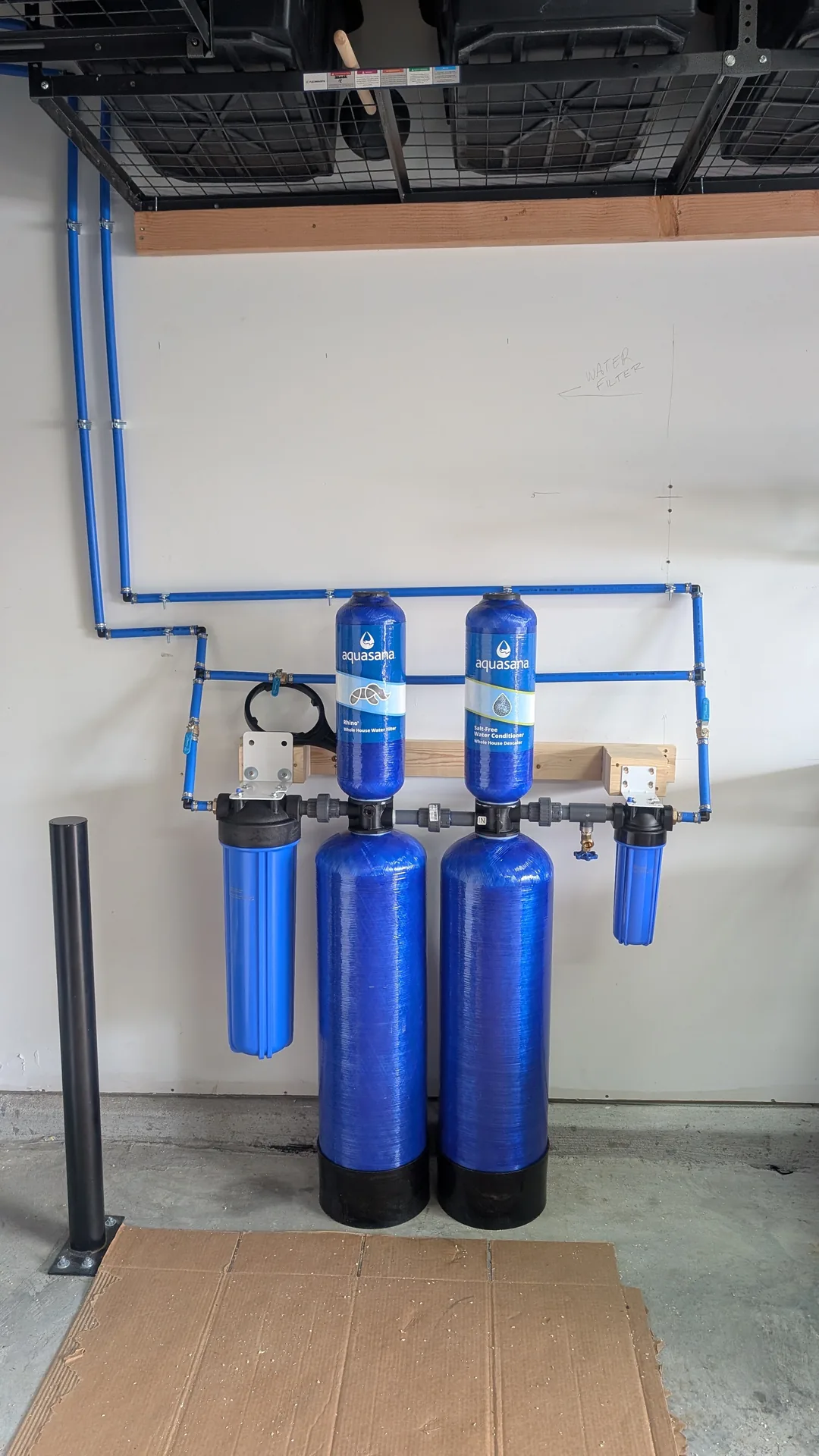
Most systems go in where the main water line enters the house. If that spot is easy to reach in a garage or utility room, installation is simpler. If the line runs through a tight crawlspace, or there’s no room for the equipment, expect more labor. Softeners also need a drain and, in most cases, an outlet nearby.
Filter Changes and Ongoing Costs
The purchase price isn’t the whole picture. Cartridges need replacing, carbon media wears out over time, and softeners need salt. Ask for the yearly maintenance cost before you buy, not after. A cheaper system with expensive cartridges can cost more over five years than a pricier system with low upkeep.
Filtration vs. Softening: Do You Need Both?
Filtration and softening do different jobs, and plenty of homeowners mix them up.
A filter removes things: sediment, chlorine, odors, and certain contaminants depending on the media. A softener swaps out the calcium and magnesium that cause hardness. A filter alone won’t stop scale. A softener alone won’t fix chlorine taste.
If your main complaints are white crust on faucets, spotty dishes, and dry skin, start with softening. If your complaint is taste, smell, or sediment, start with filtration. If it’s both, a combination system usually makes more sense than two separate projects. The USGS explains water hardness and how it’s measured if you want to dig into your test results.
Water Filtration System Installation: What the Job Looks Like
A typical water filtration system installation takes most of a day for a standard setup. Here’s what to expect:
- Look at your water. We start with your utility report or a water test so the system matches the actual problem.
- Recommend a system. You get a plain explanation of what each stage does and what it costs to maintain.
- Install at the main line. The system goes in where water enters your home, with a bypass valve so you can service it without shutting off the house.
- Test and walk through. We check flow and pressure, confirm everything is working, and show you how and when to change filters.
Is Whole-Home Filtration Worth It?
For many Middle Tennessee homes, yes, especially if you have hard water or a private well. The value shows up in a few places:
- Appliances last longer. Less scale means water heaters, dishwashers, and washing machines work less hard.
- Fixtures stay cleaner. Less crust on showerheads and faucets, fewer spots on glass.
- Every tap is covered. Not just the kitchen sink, but showers, laundry, and ice makers too.
A whole-home system also makes daily life simpler. Instead of buying bottled water or changing pitcher filters every few weeks, you change cartridges on a set schedule and forget about it the rest of the year. For families in a 3-4 bedroom home, that convenience adds up quickly.
If your only concern is drinking water taste, an under-sink system may be all you need. We’ll tell you if that’s the case, even if it means a smaller job.
Why We Quote After Looking at Your Water
A price posted online can’t account for your water report, your household size, or where your main line comes in. A city water home in Columbia that needs basic filtration and a well water home in rural Maury County that needs three stages are very different jobs. We’d rather give you one straight price for the system you actually need than a range that doesn’t fit your home.
Find the Right System for Your Water
The whole house water filtration cost that’s right for your home depends on what’s in your water, how many people live there, and where your main line comes in.
The next step is a water test and an on-site quote. We’ll explain your options in plain language and give you a straight price before any work starts. Our team installs water filtration and softening systems across Columbia, Spring Hill, Mount Pleasant, Franklin, Brentwood, Leiper’s Fork, Maury County, and Williamson County. Call 931-570-1636 or email office@duckriverplumbing.com to get started.
Frequently Asked Questions
How often do whole-house water filters need to be changed?
Most sediment cartridges need changing every few months, and carbon media often lasts much longer. The exact schedule depends on your water quality and how much water your household uses. Your installer should give you a written schedule for your specific system.
Does a whole-house filter remove lead?
Some do, but not all. A system has to be specifically designed and certified for lead reduction to count on it. If lead is a concern, ask for a system certified for that purpose and confirm it with testing after installation.
Will a whole-home filtration system lower my water pressure?
A properly sized system shouldn't cause a noticeable drop. Pressure problems usually come from a system that's too small for the home or filters that are overdue for a change. Sizing for your number of bathrooms prevents most of these issues.
Is a water softener the same as a water filter?
No. A softener removes the minerals that cause hard water, while a filter removes sediment, chlorine, and other contaminants. Many Middle Tennessee homes benefit from both, and combination systems handle each job in one setup.
Can I install a whole-house water filter myself?
Some handy homeowners do, but it means cutting into your main water line. A mistake can cause leaks or pressure problems, and softeners also need proper drain connections. Professional installation makes sense for most homes, especially larger or multi-stage systems.